Discover the best months, sea conditions, and time of day to swim with oceanic manta rays at Manta Point and Manta Bay in Nusa Penida. Over 90% sighting rate explained.
Are Manta Rays in Nusa Penida Year-Round?
The short answer is: YES! Unlike many migratory marine animals worldwide that only visit tropical waters for a brief 2-month window, reef manta rays (Mobula alfredi) are resident inhabitants of the coastal limestone waters surrounding Nusa Penida, Nusa Ceningan, and Nusa Lembongan. Because rich deep-sea upwellings from the Lombok Strait pump nutrient-dense plankton directly into the south coast shallows, manta rays can be observed feeding, cleaning, and mating in Nusa Penida throughout all 12 months of the year. Our captains record an exceptional year-round sighting success rate exceeding 90% at Manta Point and Manta Bay.
Peak Season vs. Shoulder Season (May to November)
While manta rays are present year-round, the dry season (May through October) offers the most comfortable boat ride and highest underwater visibility (often reaching 15–25 meters). During July to September, cooler oceanic currents also bring the elusive Mola Mola (ocean sunfish) into shallower depths, creating once-in-a-lifetime marine encounters.
Wet Season Sighting Conditions (December to April)
The wet or monsoon season brings warmer sea temperatures and abundant plankton blooms, attracting substantial schools of feeding mantas. While rain showers can occur in the late afternoon, morning boat charters typically depart under clear skies and calm ocean conditions.
Best Time of Day: Why Morning Charters Win
Morning is universally recognized as the prime window for swimming with manta rays. Manta cleaning stations—where mantas hover almost motionless while cleaner wrasses remove parasites from their skin and gills—are most active between 07:30 AM and 11:30 AM. Furthermore, southern ocean swells and surface winds tend to strengthen in the mid-afternoon, making morning snorkeling waters substantially calmer, clearer, and safer for all swimming abilities.
Tide Cycles and Plankton Accumulation
Mantas gather along current lines where plankton concentrates. Experienced local skippers monitor daily lunar cycles and tidal shifts, adjusting arrival times at Manta Bay to align with the peak feeding flow.
Manta Point vs. Manta Bay: Understanding The Two Sites
Travelers frequently confuse Manta Point with Manta Bay. Manta Point is located on the dramatic, sheer cliff coast of southern Nusa Penida and serves as a major cleaning station with majestic limestone underwater topography. Manta Bay is a sheltered cove further north, famed as a primary feeding ground where mantas breach the surface to scoop plankton. On our 4-spot snorkeling excursions ($22 USD / IDR 350.000), our captain evaluates real-time sea swell conditions to bring you to the safest, most active site of the day.
Complimentary Underwater Photography
Every snorkeling tour with Ubud Jungle Adventures includes free high-resolution underwater GoPro photos and video footage captured by our in-water guides, ensuring you leave with stunning proof of your encounter.
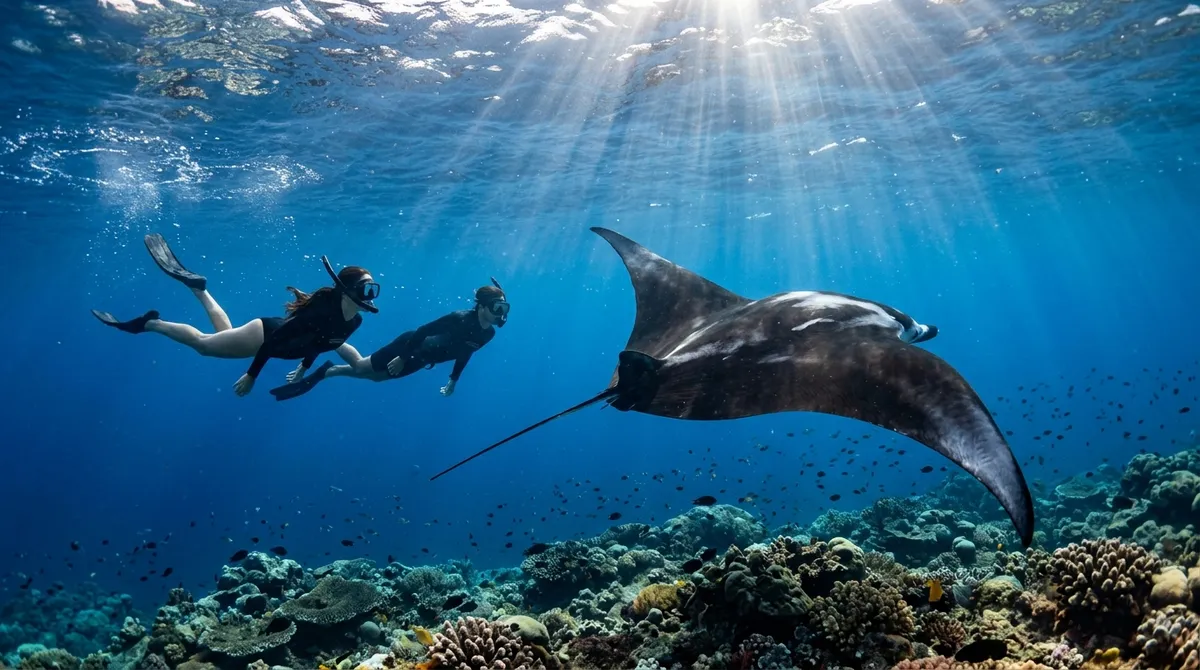
Nusa Penida Manta Ray Snorkeling Trip: Manta Bay, Gamat Bay & Crystal Bay
Swim alongside wild oceanic manta rays in crystal-clear Bali waters! 3-spot boat snorkeling tour at Manta Bay, Gamat Bay & Crystal Bay with free GoPro photos & videos
Frequently Asked Questions
Our guided snorkeling tours experience a consistent sighting rate of over 90% across the year. Because these are wild oceanic creatures, our captains visit both Manta Point and Manta Bay to maximize your encounter chances.